Exhibit.

For your ZTP deployment, you review the CSV file shown in exhibit and note that it is missing important information. Which two elements must you change before you can import it into FortiManager? (Choose two.)
As an IT manager for a healthcare company, you want to delegate the installation and management of your SD-WAN deployment to a managed security service provider (MSSP). Each site must maintain direct internet access and ensure that it is secure. You expected significant traffic flow between the sites and want to delegate as much of the network administration and management as possible to the MSSP.
Which two MSSP deployment blueprints best address the customer’s requirements? (Choose two.)
Refer to the exhibits.
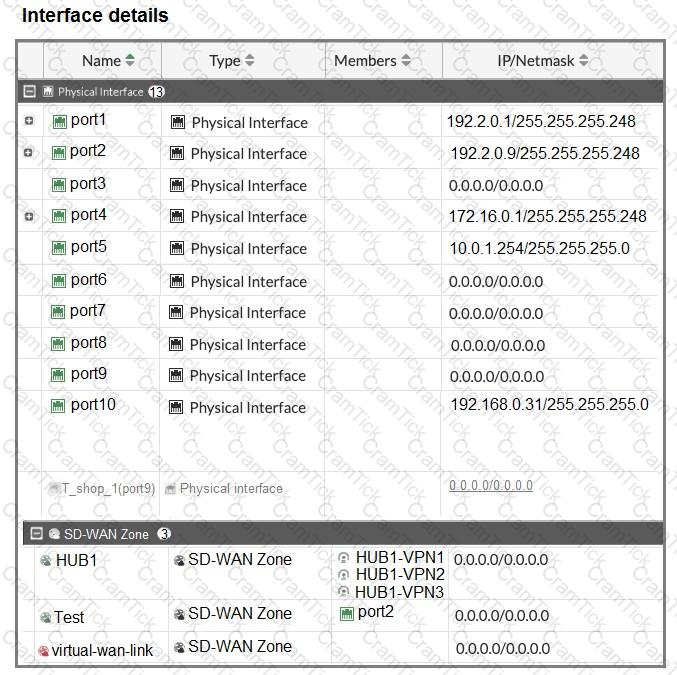
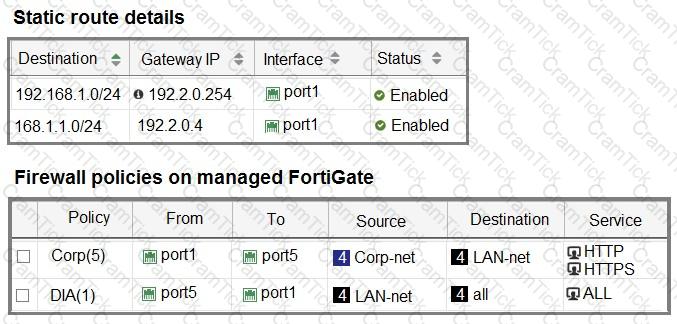
The interface details, static route configuration, and firewall policies on the managed FortiGate device are shown.
You want to configure a new SD-WAN zone, named Underlay, that contains the interfaces port1 and port2.
What must be your first action?
Refer to the exhibit.
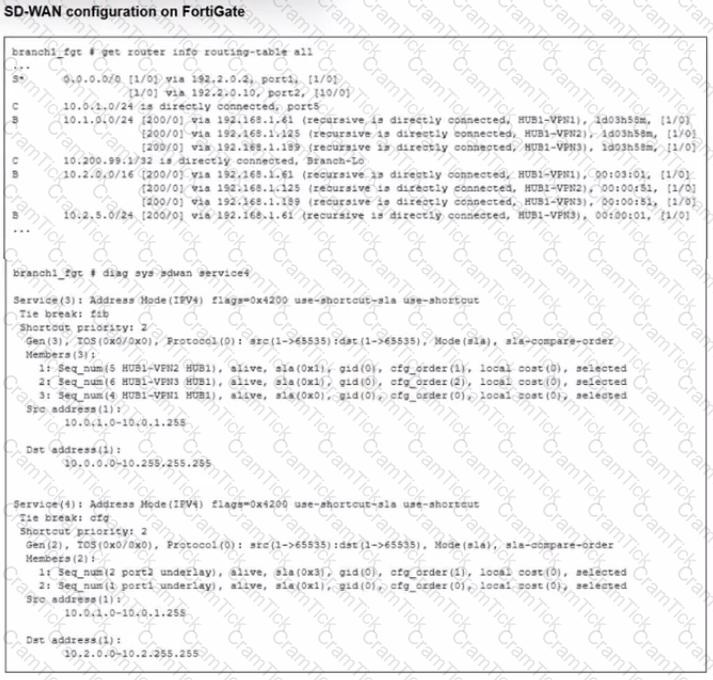
Which SD-WAN rule and interface uses FortiGate to steer the traffic from the LAN subnet 10.0.1.0/24 to the corporate server 10.2.5.254?
Refer to the exhibits.
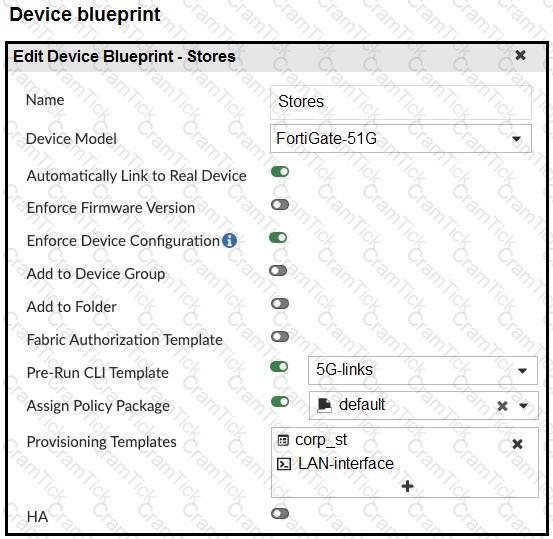
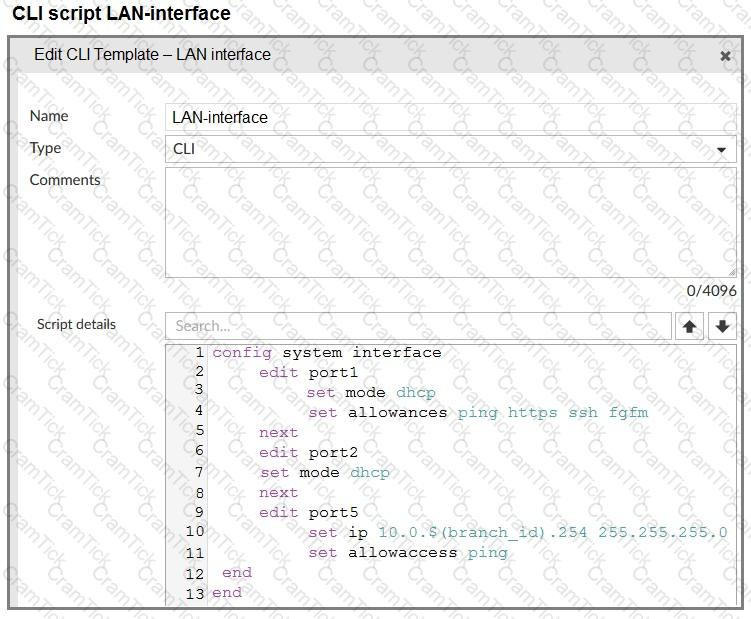
The administrator configured a device blueprint and CLI scripts as shown in the exhibits, to prepare for onboarding FortiGate devices in the company’s stores. Later, a technician prepares a FortiGate 51G with a basic configuration and connects it to the network. The basic configuration contains the port1 configuration and the minimal configuration required to allow the device to connect to FortiManager.
After the device first connects to FortiManager, FortiManager updates the device configuration.
Based on the exhibits, which actions does FortiManager perform?
Exhibit.
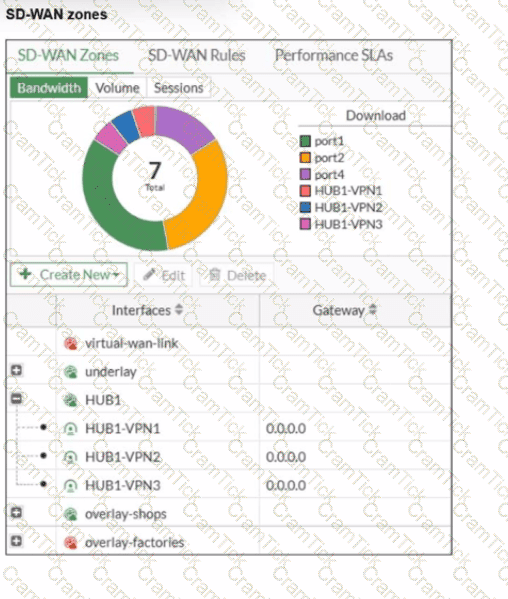
Refer to the exhibit, which shows an SD-WAN zone configuration on the FortiGate GUI. What can you conclude about the zone and member configuration on this device?
(Refer to the exhibits.
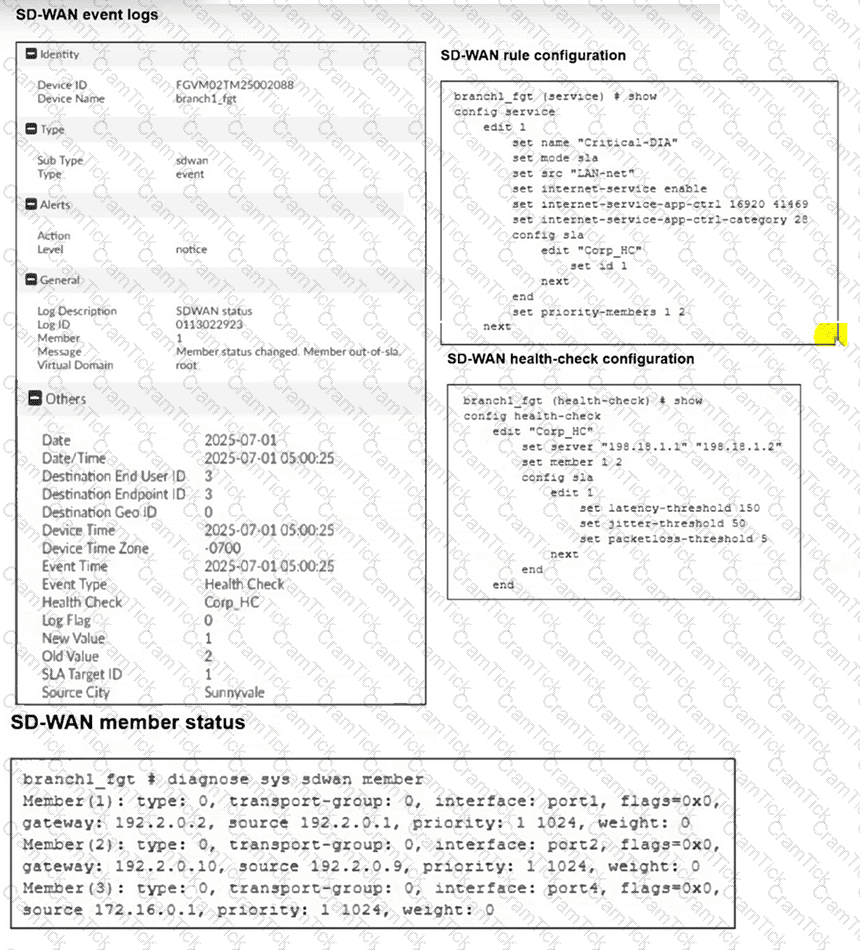
Two SD-WAN event logs, the member status, the SD-WAN rule configuration, and the health-check configuration for a FortiGate device are shown.
Immediately after the log messages are displayed, how will the FortiGate steer the traffic based on the information shown in the exhibits? Choose one answer.)
You are planning a new SD-WAN deployment with the following criteria:
- Two regions
- Most of the traffic is expected to remain within its region
- No requirement for inter-region ADVPN
To remain within the recommended best practices, which routing protocol should you select for the overlays?
Refer to the exhibit.
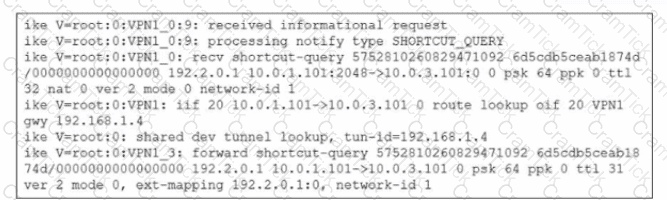
Which statement best describe the role of the ADVPN device in handling traffic?
(In which order does FortiGate consider the following elements during the route lookup process? Choose one answer.)
Refer to the exhibit.
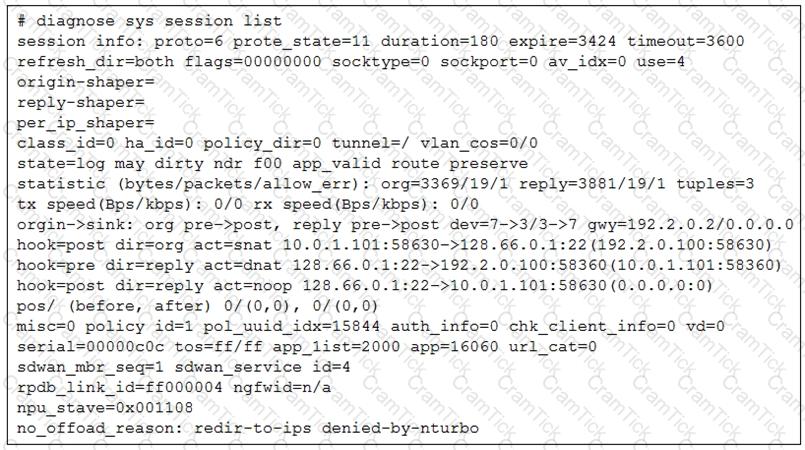
The administrator configured the SD-WAN rule ID 4 with two members (port1 and port2) and strategy lowest cost (SLA).
What are the two characteristics of the session shown in the exhibit? (Choose two.)
Refer to the exhibits.
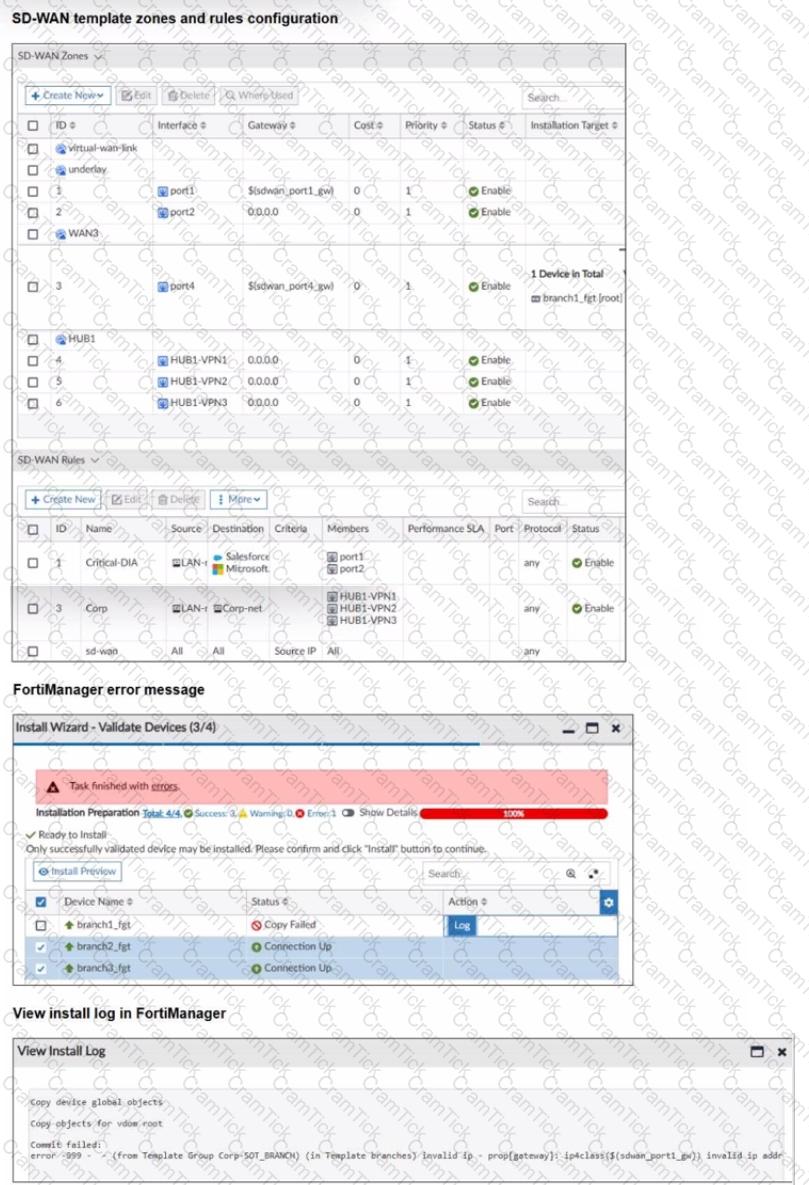
You use FortiManager to configure SD-WAN on three branch devices.
When you install the device settings. FortiManager prompts you with the error " Copy Failed " for the device branch1_fat When you click the log button. FortiManager displays the message shown in the exhibit.
Refer to the exhibit that shows a diagnose output on FortiGate.
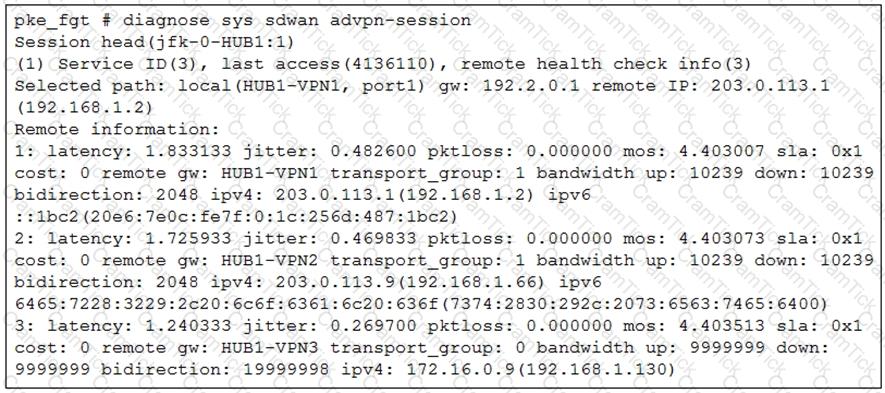
Based on the output shown in the exhibit, what can you say about the device role and how it handles health checks?
You are planning a large SD-WAN deployment with approximately 1000 spokes and want to allow ADVPN between the spokes. Some remote sites use FortiSASE to connect to the company ' s SD-WAN hub. Which overlay routing configuration should you use?
Refer to the exhibit.
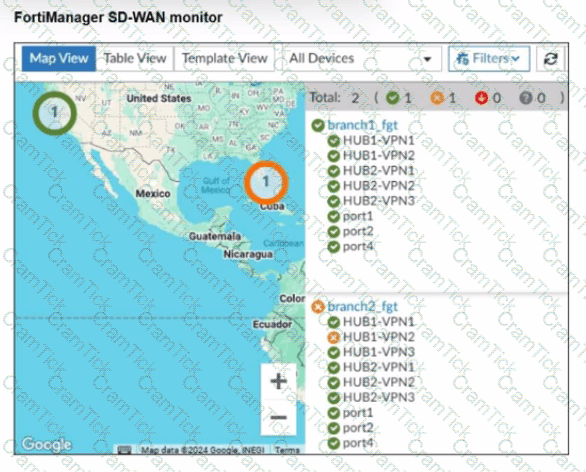
An administrator checks the status of an SD-WAN topology using the FortiManager SD-WAN monitor menus. All members are configured with one or two SLAs.
Which two conclusions can you draw from the output shown? (Choose two.)
Exhibit.
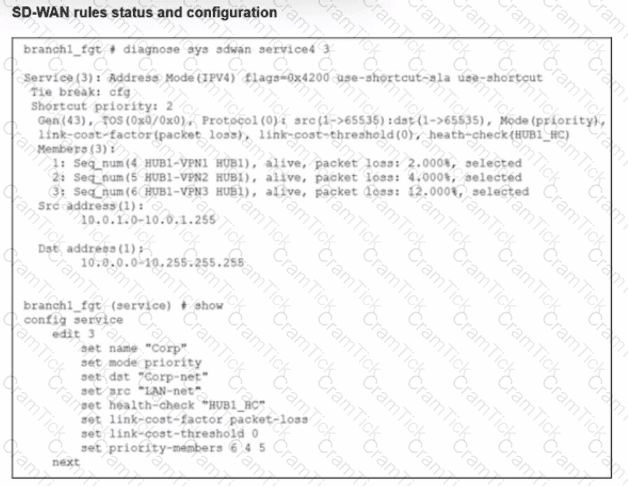
Refer to the exhibit, which shows the SD-WAN rule status and configuration.
Based on the exhibit, which change in the measured packet loss will make HUB1-VPN3 the new preferred member?
(You configure the overlay tunnels for an SD-WAN hub-and-spoke topology defined with IPsec tunnels, BGP on loopback, and dynamic BGP.
Which are two recommended IPsec settings for this topology? Choose two answers.)
(Refer to the exhibit.
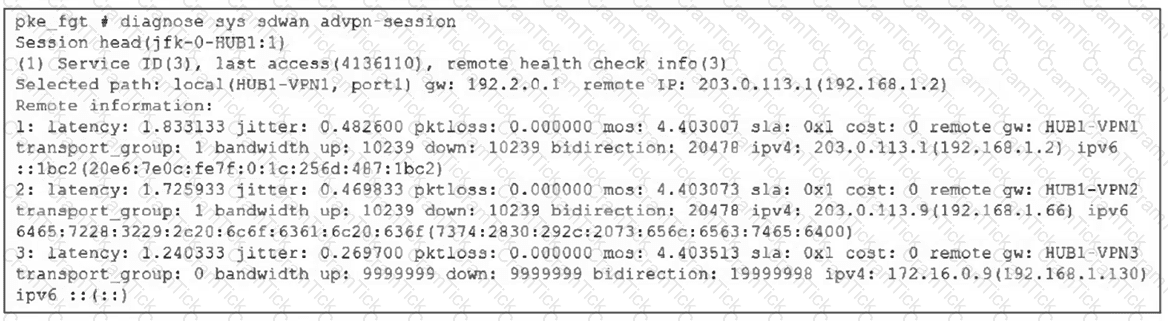
Based on the output shown in the exhibit, what can you conclude about the device role and how it handles health checks? Choose one answer.)
Refer to the exhibits, which show the configuration of an SD-WAN rule and the corresponding rule status and routing table.
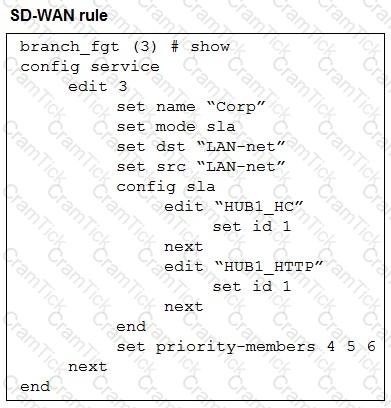
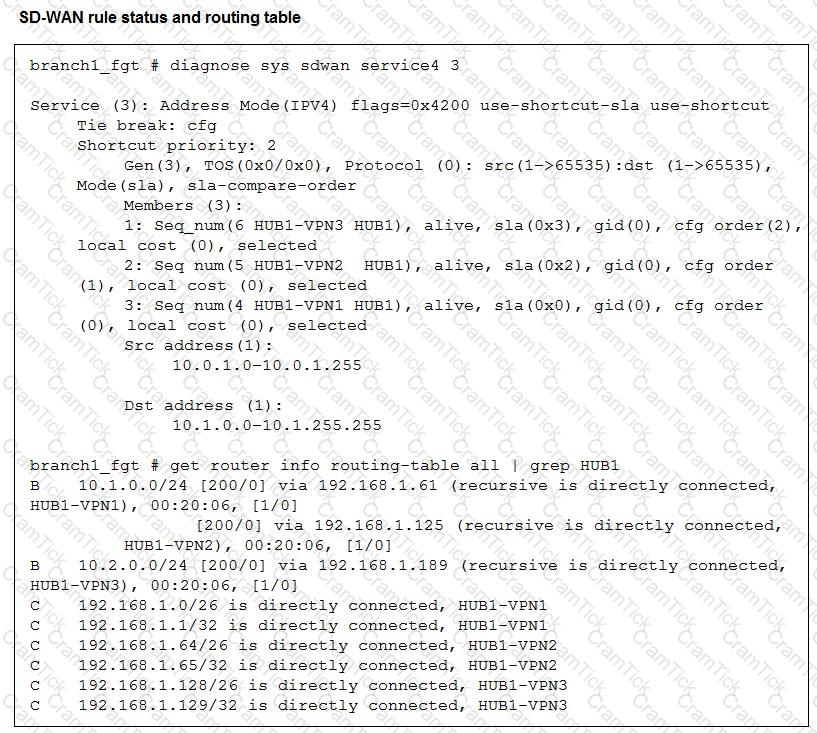
The administrator wants to understand the expected behavior for traffic matching the SD-WAN rule.
Based on the exhibits, what can the administrator expect for traffic matching the SD-WAN rule?
Refer to the exhibit.
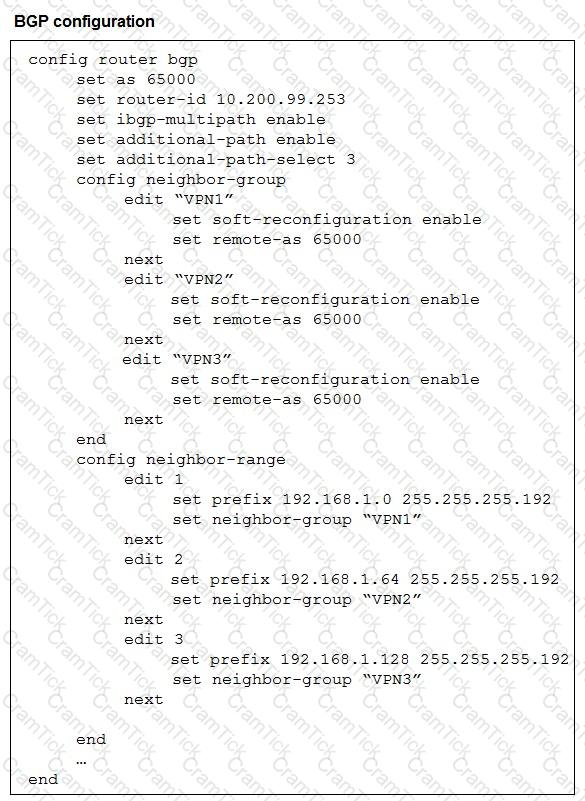
The exhibit shows the BGP configuration on the hub in a hub-and-spoke topology. The administrator wants BGP to advertise prefixes from spokes to other spokes over the IPsec overlays, including additional paths. However, when looking at the spoke routing table, the administrator does not see the prefixes from other spokes and the additional paths
Which three settings must the administrator configure inside each BGP neighbor group so spokes can learn the prefixes of other spokes and their additional paths? (Choose three.)
The administrator uses the FortiManager SD-WAN overlay template to prepare an SD-WAN deployment. Using information provided through the SD-WAN overlay template wizard, FortiManager creates templates ready to install on the spoke and hub devices.
What are the three templates created by the SD-WAN overlay template for a spoke device? (Choose three.)
(Refer to the exhibit.
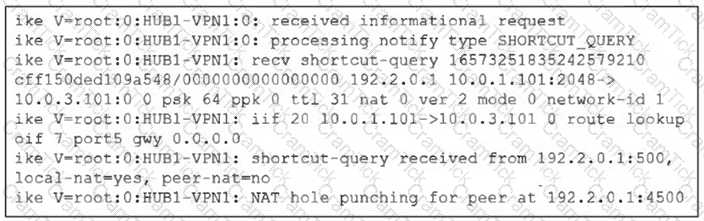
Which statement correctly describes the role of the ADVPN device in handling traffic? Choose one answer.)
You want FortiGate to use SD-WAN rules to steer ping local-out traffic .
Which two constraints should you consider? Choose two answers.
Refer to the exhibits.
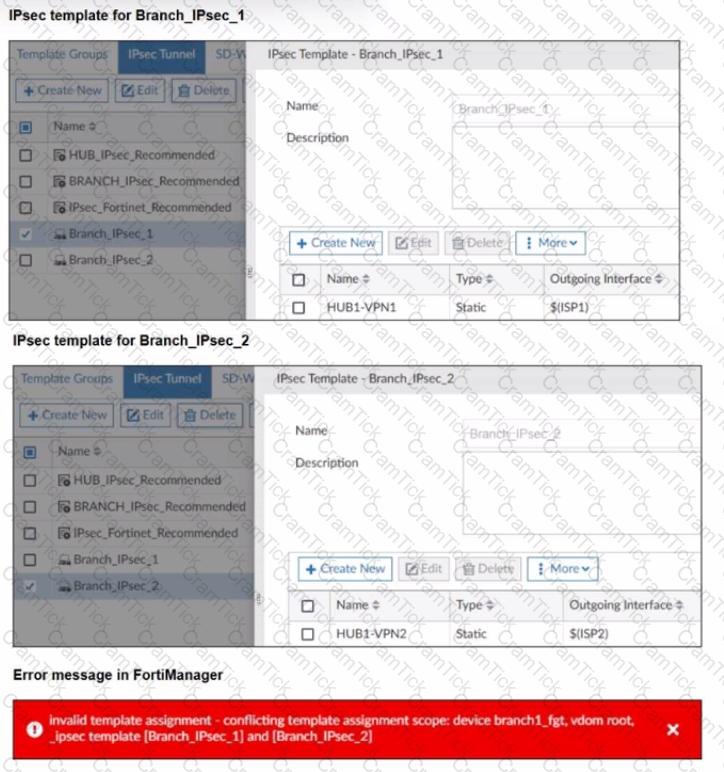
The exhibits show two IPsec templates to define Branch IPsec 1 and Branch_IPsec_2. Each template defines a VPN tunnel. The error message that FortiManager displayed when the administrator tried to assign the second template to the FortiGate device is also shown.
Which statement best describes the cause of the issue?




TESTED 16 Oct 2026