Given this dbt_project.yml:
name: "jaffle_shop"
version: "1.0.0"
config-version: 2
profile: "snowflake"
model-paths: ["models"]
macro-paths: ["macros"]
snapshot-paths: ["snapshots"]
target-path: "target"
clean-targets:
- "logs"
- "target"
- "dbt_modules"
- "dbt_packages"
models:
jaffle-shop:
+materialized: table
…and this warning when compiling your project:
[WARNING]: Configuration paths exist in your dbt_project.yml file which do not apply to any resources.
There are 1 unused configuration paths:
- models.jaffle-shop
What is the root cause?
A run hook in the jaffle_shop project was defined with an incorrect regular expression.
A developer imports a package from a private repository called timeformat for use within their project.
Which statement is correct? Choose 1 option.
Options:
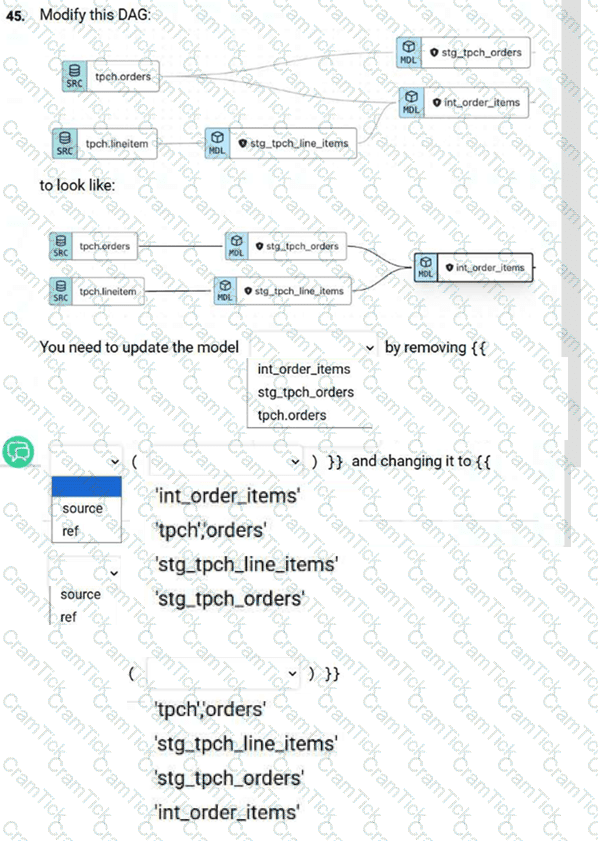
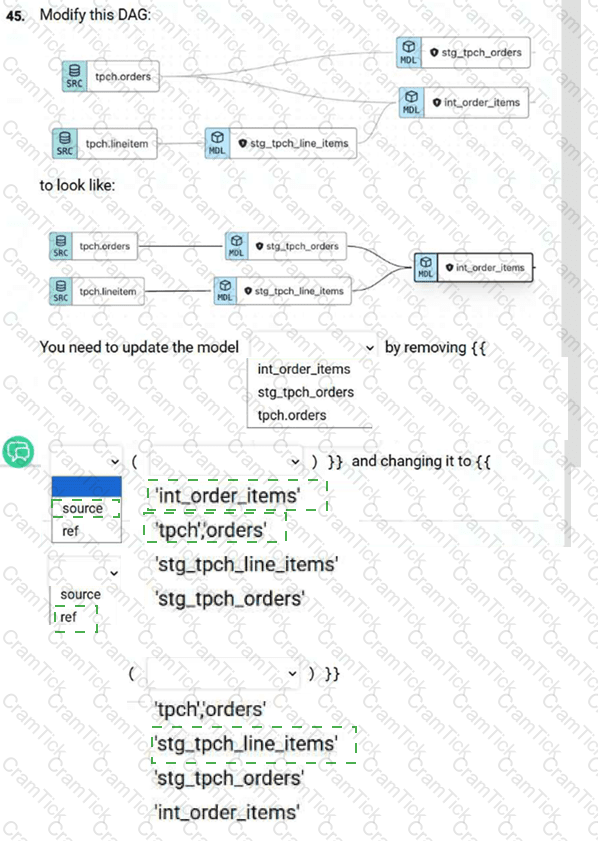
Which two code snippets result in a lineage line being shown in the DAG? Choose 2 options.
Which two configuration items can be defined under models: in your dbt_project.yml file?
Choose 2 options.
Examine the configuration for the source:
sources:
- name: jaffle_shop
schema: jaffle_shop_raw_current
tables:
- name: orders
identifier: customer_orders
Which reference to the source is correct?
32. You are creating a fct_tasks model with this CTE:
with tasks as (
select * from {{ ref('stg_tasks') }}
)
You receive this compilation error in dbt:
Compilation Error in model fct_tasks (models/marts/fct_tasks.sql)
Model 'model.dbt_project.fct_tasks' (models/marts/fct_tasks.sql) depends on a node named 'stg_tasks' which was not found
Which is correct? Choose 1 option.
Options:
Examine model stg_customers_sales that exists in the main branch:
select
id as customer_id,
name as customer_name
from {{ source('my_data','my_source') }}
A developer creates a branch feature_a from main and modifies the model as:
select
id as customer_id,
name as customer_name,
country as customer_country
from {{ source('my_data','my_source') }}
A second developer also creates a branch feature_b from main and modifies the model as:
select
id as customer_id,
name as customer_name,
address as customer_address
from {{ source('my_data','my_source') }}
The first developer creates a PR and merges feature_a into main.
Then the second developer creates a PR and attempts to merge feature_b into main.
How will git combine the code from feature_b and the code from main, which now contains the changes from feature_a as well?
Statement:
"As feature_a is already approved and merged to main, the code for the model stg_customers_sales will stay as-is and the changes from feature_b won’t be added."
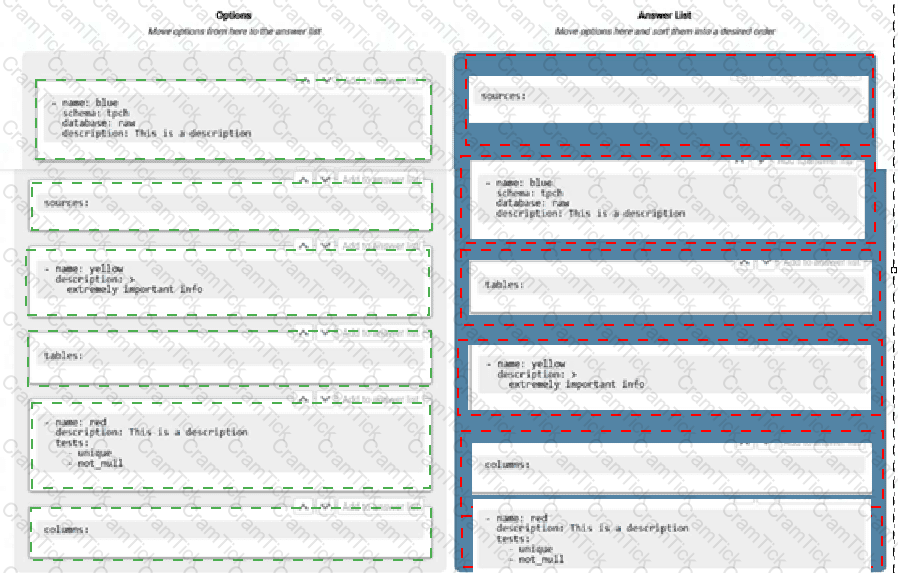
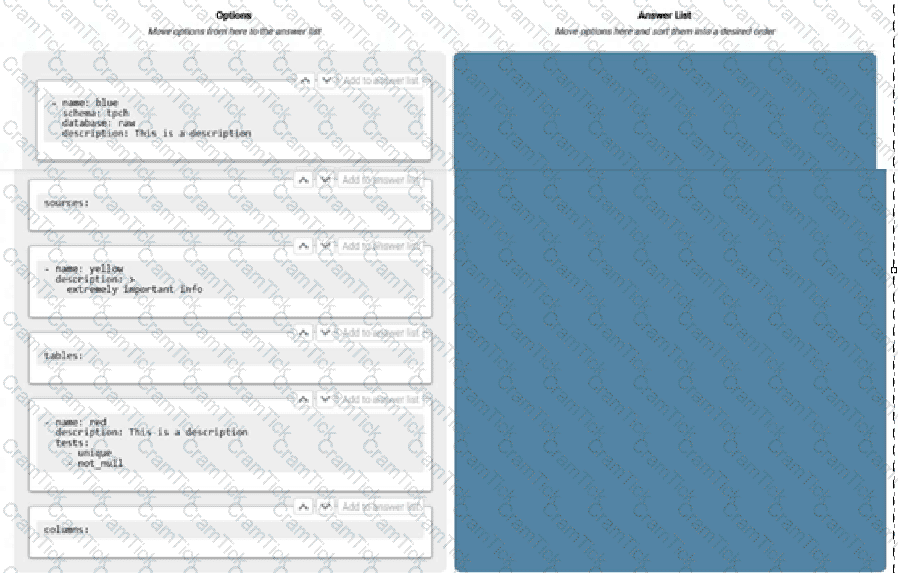
Ignoring indentation, arrange these YAML code snippets in the correct order to generate descriptions on the source, table, and column:
You want to add new columns to an existing model with a new version.
What will trigger warnings for removal of older model versions?
Choose 1 option.
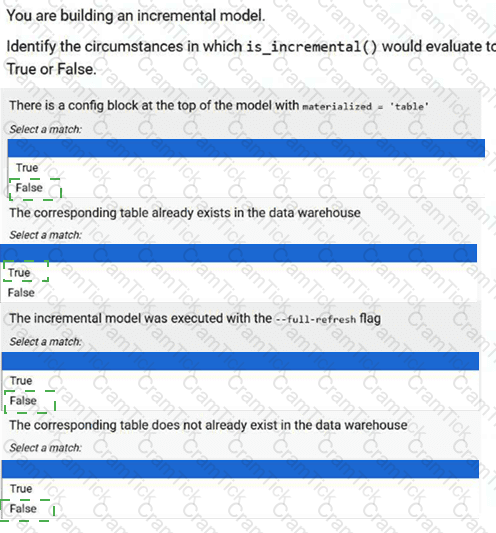
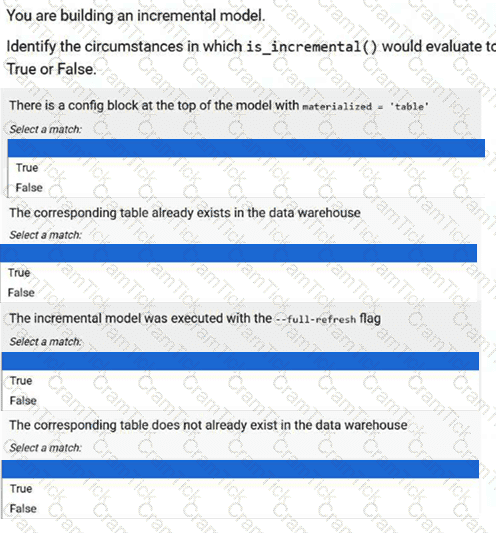
You are building an incremental model.
Identify the circumstances in which is_incremental() would evaluate to True or False.
16. Your tests folder looks like:
tests
└── generic
└── furniture_customers_test.sql
macro_stg_tpch_orders_assert_pos_price.sql
macro_stg_tpch_suppliers_assert_pos_acct_bal.sql
stg_tpch_orders_assert_positive_price.sql
You run the command:
dbt test --select 'test_type:singular'
What will the command run?
Options from screenshot:
Consider this DAG for a dbt project. You have configured your environment to use one thread.
When running dbt run, you determine that model_d fails to materialize.
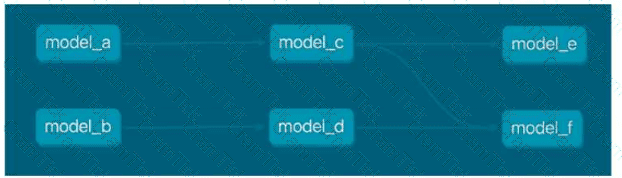
How will changing the command from dbt run to dbt run --fail-fast impact the execution of dbt run when model_d fails to materialize? Choose 1 option.
Options:




TESTED 05 Oct 2026