Refer to the exhibits.
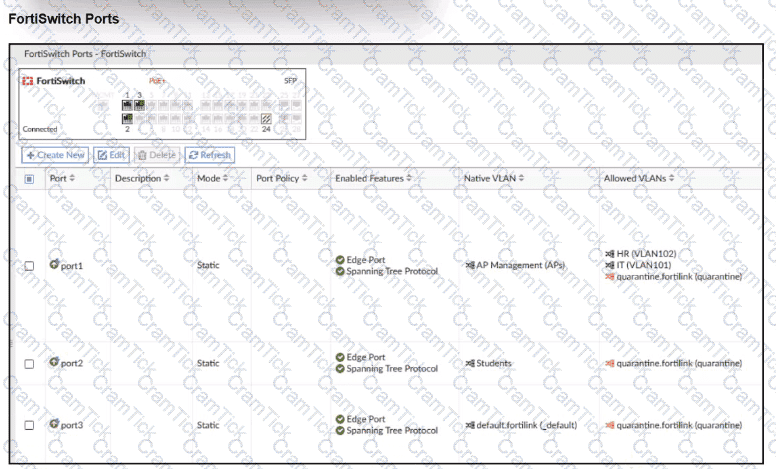
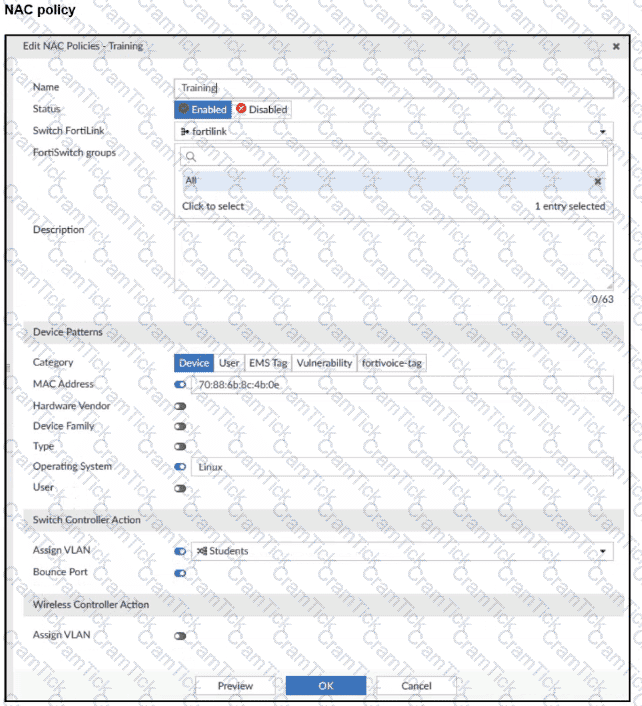
A NAC policy has been configured to apply traffic that flows through FortiSwitch port 2. Traffic that meets the NAC policy criteria will be assigned to the Students VLAN. However, the NAC policy does not seem to be taking effect.
Which configuration is missing?
APs have been manually configured to connect to FortiGate over an IPsec network, and FortiGate successfully detects and authorizes them. However, the APs remain unmanaged because FortiGate is unable to establish a CAPWAP tunnel with them.
What configuration change can resolve this issue and enable FortiGate to establish the CAPWAP tunnel over the IPsec connection?
Which VLAN is used by FortiGate to place devices that fail to match any configured NAC policies? CRSPAN
Refer to the exhibits.
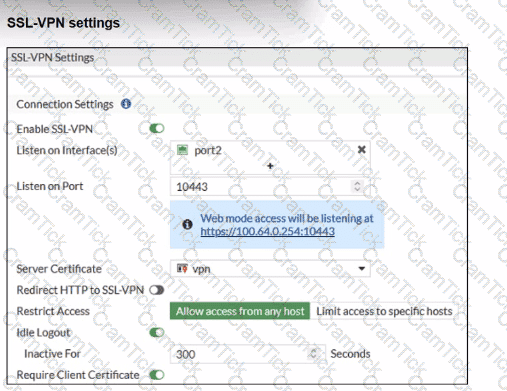
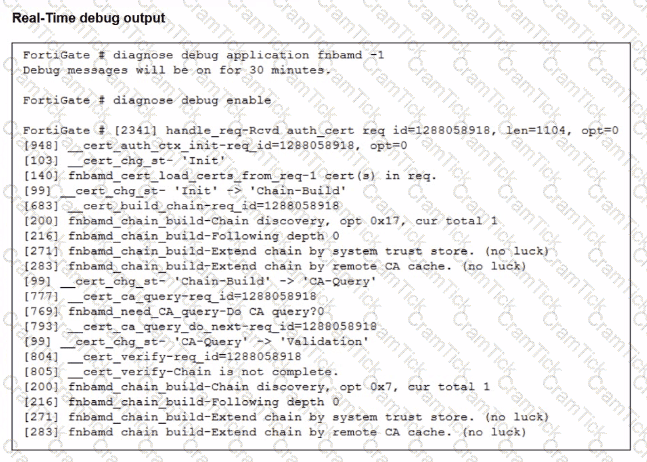
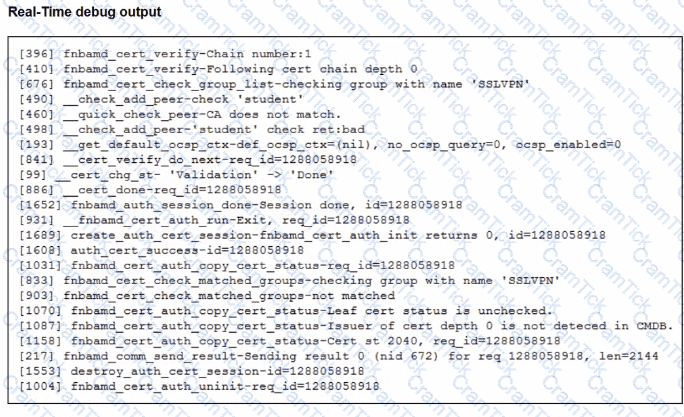
Which include debug output and SSL VPN configuration details.
An SSL VPN has been configured on FortiGate. To enhance security, the administrator enabled Required Client Certificate in the SSL VPN settings. However, when a user attempts to connect, authentication fails.
Which configuration change is needed to fix the issue and allow the user to connect?
Why is the suppression of rogue APs becoming more difficult with the introduction of new wireless security standards, such as 802.11w?
You are deploying a FortiSwitch device managed by FortiGate in a secure network environment. To ensure accurate communication, you must identify which protocols are required for communication and control between FortiGate and FortiSwitch.
Which three protocols are used by FortiGate to manage and control FortiSwitch devices? (Choose three.)
Refer to the exhibits.
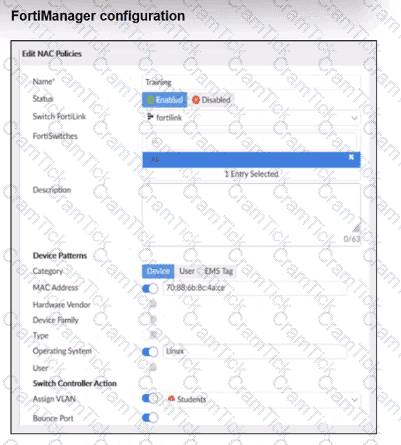
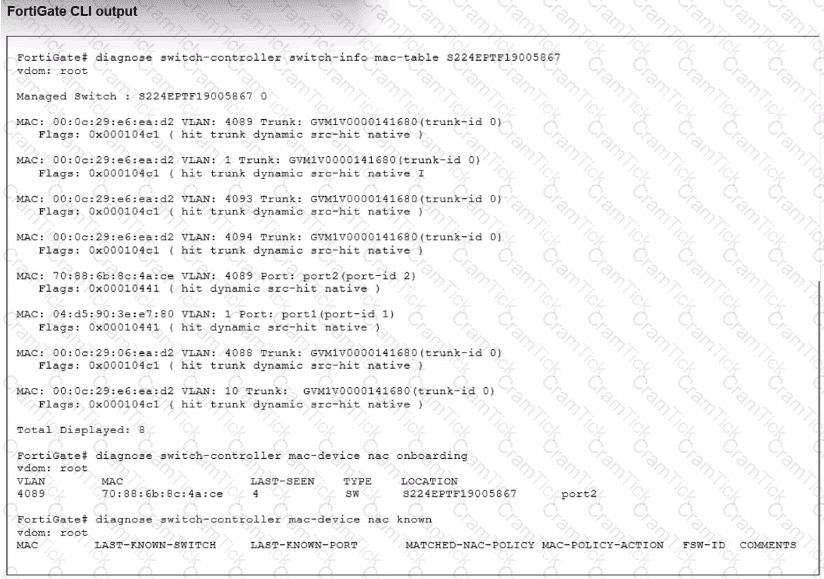
Examine the FortiManager configuration and FortiGate CLI output shown in the exhibit.
The NAC feature is being tested with a device connected to port2 on managed FortiSwitch S224SPTF19005867. The NAC policy has been applied to port2, and traffic was generated from the test device. However, the traffic from the test device does not match the NAC policy and remains in the onboarding VLAN.
What are two possible reasons why the test device is not being correctly classified by the NAC policy? (Choose two.)
A conference center wireless network provides guest access through a captive portal, allowing unregistered users to self-register and connect to the network. The IT team has been tasked with updating the existing configuration to enforce captive portal authentication over a secure HTTPS connection. Which two steps should the administrator take to implement this change? (Choose two.)
Refer to the exhibits.
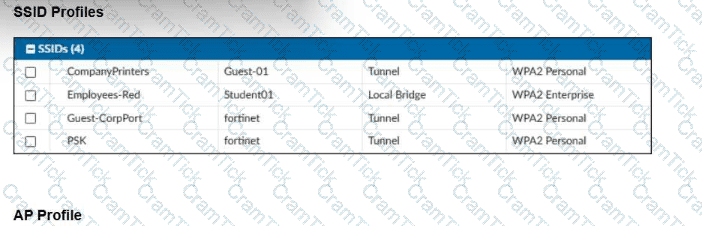
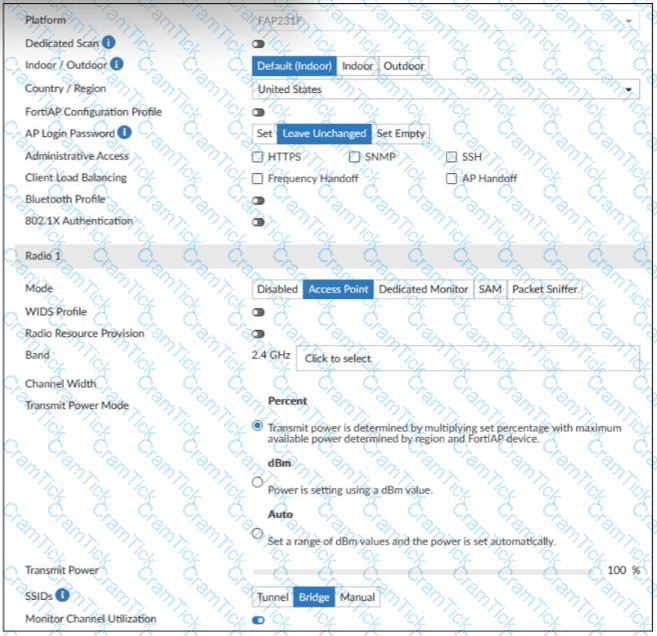
A set of SSID profiles has been configured on FortiManager, and an AP profile has been assigned to a group of APs managed by FortiGate. However, none of the designated SSIDs are being broadcast by these APs.
Which configuration change is required to make the APs broadcast these SSIDs as intended?
Refer to the exhibits.
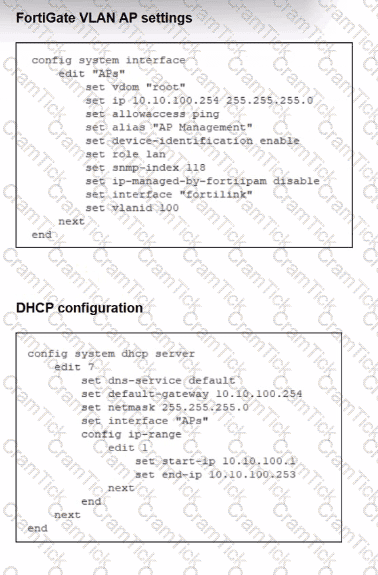
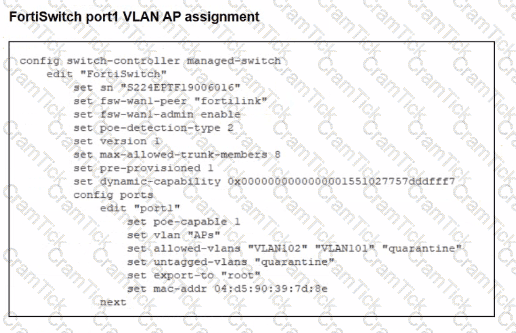
A FortiSwitch is successfully managed by a FortiGate. FortiAP is connected to port1 of the managed FortiSwitch. On FortiGate, the VLAN AP is configured to detect and manage FortiAP, along with a DHCP server for the VLAN AP. Additionally, the VLAN AP is assigned to port1 of FortiSwitch. However. FortiGate is unable to detect or manage FortiAP.
Which FortiGate misconfiguration is preventing the detection of FortiAP?
Refer to the exhibits to analyze a network topology and SSID settings.
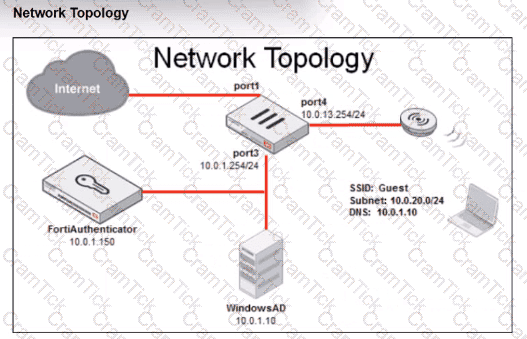
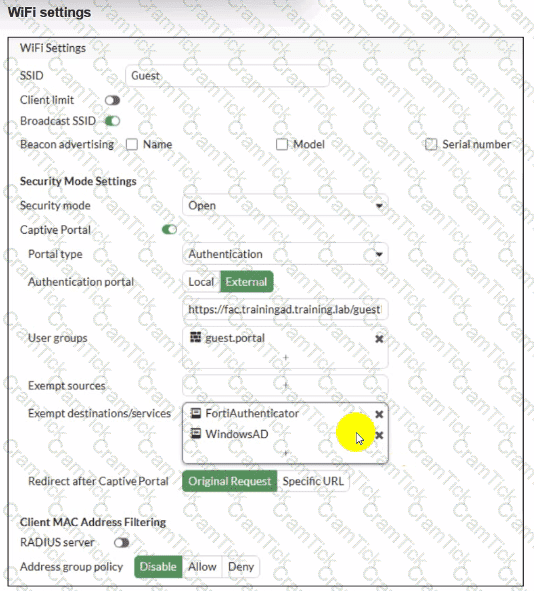
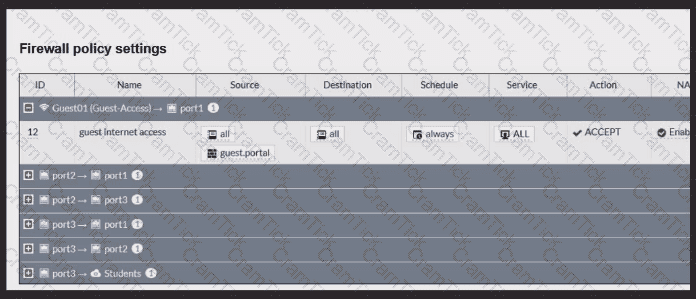
FortiGate is configured to use an external captive portal for authentication to grant access to a wireless network. Testing detected that users attempting to access the SSID are not able to access the captive portal login page. Which configuration change should fix this issue?




TESTED 14 Sep 2026