
Conducting Threat Hunting and Defending using Cisco Technologies for Cybersecurity
Last Update Oct 5, 2026
Total Questions : 60 With Methodical Explanation
Why Choose CramTick

Last Update Oct 5, 2026
Total Questions : 60

Last Update Oct 5, 2026
Total Questions : 60

Customers Passed
Cisco 300-220
Average Score In Real
Exam At Testing Centre
Questions came word by
word from this dump

Try a free demo of our Cisco 300-220 PDF and practice exam software before the purchase to get a closer look at practice questions and answers.

We provide up to 3 months of free after-purchase updates so that you get Cisco 300-220 practice questions of today and not yesterday.

We have a long list of satisfied customers from multiple countries. Our Cisco 300-220 practice questions will certainly assist you to get passing marks on the first attempt.

CramTick offers Cisco 300-220 PDF questions, and web-based and desktop practice tests that are consistently updated.

CramTick has a support team to answer your queries 24/7. Contact us if you face login issues, payment, and download issues. We will entertain you as soon as possible.

Thousands of customers passed the Cisco Conducting Threat Hunting and Defending using Cisco Technologies for Cybersecurity exam by using our product. We ensure that upon using our exam products, you are satisfied.
Refer to the exhibit.
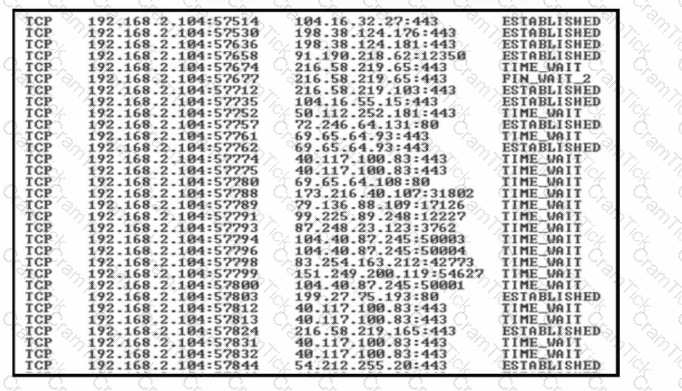
A security team detects a spike in traffic from the company web server. After further investigation, the team discovered that multiple connections have been established from the server to different IP addresses, but the web server logs contain both expected traffic and DDoS traffic. Which attribute must the team use to further filter the logs?
A SOC using Cisco security technologies wants to measure the success of its threat hunting program over time. Which metric BEST reflects increased threat hunting maturity?
While analyzing telemetry from Cisco Secure Endpoint and Secure Network Analytics, analysts observe that an adversary consistently avoids deploying malware and instead abuses built-in administrative tools. Why does this observation matter for attribution?


TESTED 05 Oct 2026